13.1 Excretion
- Describe excretion as the removal of toxic materials and the waste products of metabolism from organisms?
Excretion is the vital process by which organisms eliminate toxic substances and the waste products generated during their metabolic activities.
These waste products can be harmful if allowed to accumulate within the body, disrupting its internal balance and potentially leading to serious health issues.
Key aspects of excretion:
- Waste removal: Excretion involves the removal of various metabolic byproducts, including carbon dioxide, water, nitrogenous compounds (like urea or uric acid), salts, and other toxins.
- Maintenance of homeostasis: By eliminating these waste substances, excretion helps organisms maintain a stable internal environment, a condition known as homeostasis. This is crucial for optimal functioning and survival.
- Organ involvement: Different organs and structures are responsible for excretion in various organisms. In humans and other vertebrates, the primary organs involved are the kidneys, lungs, skin, and liver. Each of these organs plays a specific role in removing different types of waste products.
- Mechanisms:
Excretion can occur through various mechanisms, including diffusion, filtration, active transport, and secretion. These processes allow the waste substances to be transported from the cells or tissues to the excretory organs, where they are ultimately expelled from the body.
Importance of excretion:
- Prevents toxicity:
The timely removal of toxic substances prevents their buildup in the body, which can cause illness or even death.
- Maintains pH balance:
Excretion helps regulate the body’s pH (acid-base balance), which is essential for proper enzyme function and overall health.
- Regulates water balance:
The kidneys play a crucial role in maintaining the body’s water balance by adjusting the amount of water excreted in urine.
- Eliminates excess ions:
Excretion removes excess ions, such as sodium and potassium, which helps regulate blood pressure and nerve function.
In summary, excretion is an essential biological process that ensures the survival and well-being of organisms by eliminating harmful waste products and maintaining a stable internal environment.
- State that carbon dioxide is a waste product of respiration, which is excreted through the lungs?
During respiration, cells break down glucose in the presence of oxygen to produce energy. As a byproduct of this process, carbon dioxide is generated. This carbon dioxide is transported through the bloodstream to the lungs, where it diffuses into the alveoli (tiny air sacs). When we exhale, the carbon dioxide is expelled from the body.
- State that urea is a toxic waste product produced in the liver from the breakdown of excess amino acids?
Urea is a toxic waste product produced in the liver from the breakdown of excess amino acids.
Amino acids are the building blocks of proteins. When the body consumes more protein than it needs, the excess amino acids are broken down in the liver. This process produces urea, a nitrogenous waste product. Urea is then transported through the bloodstream to the kidneys for excretion.
13.2 Urinary system
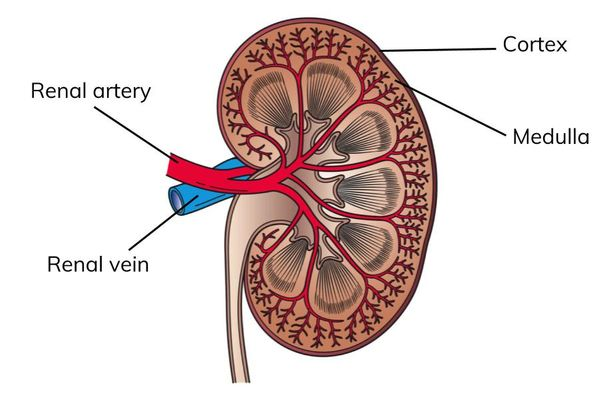
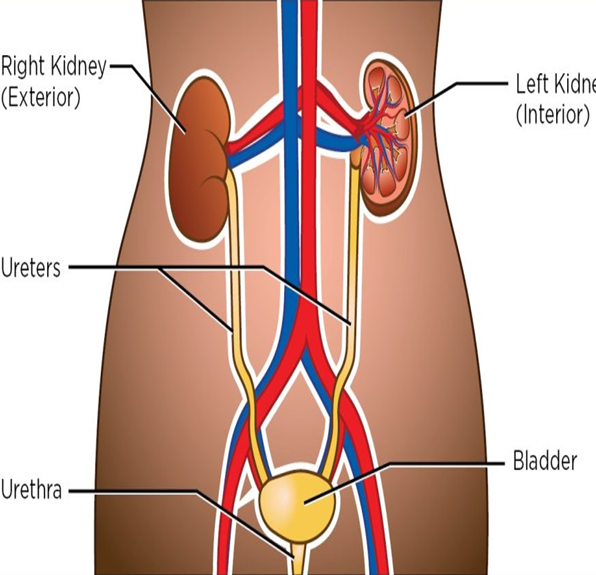
1 Identify, on diagrams, the kidneys, ureters, bladder and urethra and state the function of each (the function of the kidney should be described simply as removing urea and excess salts and water from the blood as urine)?
The Urinary System:
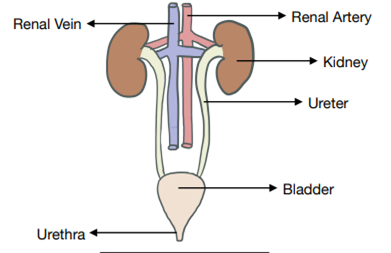
The urinary system, also known as the renal system, is responsible for filtering waste products and excess water from the blood, producing urine, and eliminating it from the body. It consists of four main organs.
- Kidneys:
- Location: Located on either side of the spine, near the lower back.
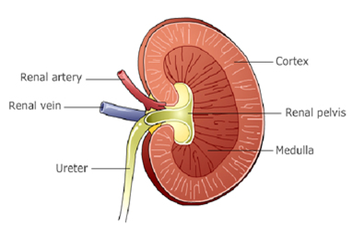
- Function: The kidneys are the primary organs of the urinary system. They filter blood, removing urea, excess salts, and water to form urine. This process helps maintain the body’s fluid and electrolyte balance.
- Ureters:
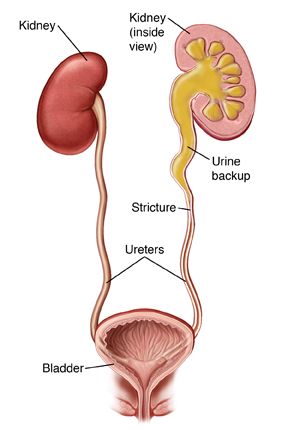
- Location:
Two narrow tubes that connect the kidneys to the bladder.
- Function:
The ureters carry urine from the kidneys to the bladder. They use peristaltic contractions (wave-like muscle movements) to propel the urine along.
- Bladder:
- Location:
A muscular sac located in the lower abdomen.
- Function:
The bladder stores urine until it is ready to be eliminated from the body. It can hold a significant amount of urine, but when it becomes full, it sends signals to the brain to initiate urination.
- Urethra:
- Location:
A tube that carries urine from the bladder out of the body.
- Function:
The urethra passes through the pelvic floor and exits the body through the urethra opening. In males, the urethra is longer and also serves as a passageway for semen.
Together, these organs work in a coordinated manner to filter waste products from the blood, produce urine, and eliminate it from the body.
- Explain the need for excretion, limited to toxicity of urea?
Urea is a nitrogenous waste product produced in the liver from the breakdown of excess amino acids. If urea were not excreted from the body, it would accumulate in the bloodstream, reaching toxic levels. This toxicity can have serious consequences, including:
- Damage to tissues and organs:
High levels of urea can damage various tissues and organs, including the kidneys, liver, and brain.
- Disruption of cellular functions:
Urea can interfere with the normal functioning of cells, leading to a variety of health problems.
- Acid-base imbalance:
The accumulation of urea can disrupt the body’s acid-base balance, which is essential for optimal cellular function.
Therefore, the excretion of urea through the urinary system is crucial to prevent these harmful effects and maintain the body’s health.
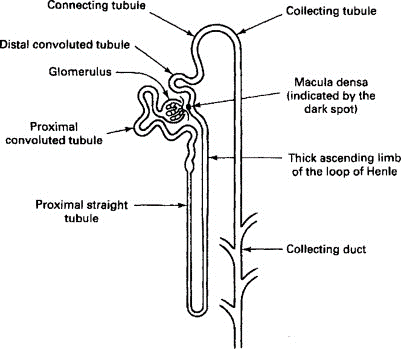
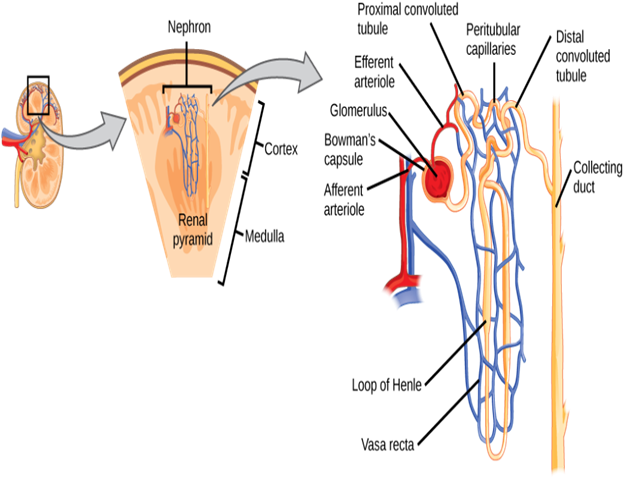
- Outline the structure of a nephron and its associated blood vessels, limited to: Bowman’s capsule, glomerulus, tubules, loop of Henle and collecting duct?
The nephron is the functional unit of the kidney, responsible for filtering blood and producing urine. It is composed of several structures, including:
- Bowman’s Capsule:
- A cup-shaped structure that surrounds the glomerulus.
- It receives filtered blood from the glomerulus.
- Glomerulus:
- A network of capillaries within the Bowman’s capsule.
- Blood is filtered through the glomerulus, with smaller molecules like water, urea, and salts passing into the Bowman’s capsule.
- Tubules:
- A long, coiled tube that extends from the Bowman’s capsule.
- It is divided into several segments:
- Proximal convoluted tubule: Reabsorbs most of the filtered water, glucose, amino acids, and salts.
- Loop of Henle:
Descends into the medulla of the kidney, creating a concentration gradient that allows for further water reabsorption.
- Distal convoluted tubule:
Reabsorbs or secretes ions, such as sodium and potassium, to regulate blood volume and pH.
- 4. Collecting Duct:
- A tube that collects urine from multiple nephrons.
- It passes through the medulla of the kidney, where additional water reabsorption can occur.
- The collecting duct carries urine to the renal pelvis and ultimately to the ureter.
Associated Blood Vessels:
- Afferent arteriole: A small artery that carries blood to the glomerulus.
- Efferent arteriole: A small artery that carries blood away from the glomerulus.
- Peritubular capillaries: A network of capillaries that surrounds the tubules, allowing for reabsorption and secretion of substances.
- Vasa recta: Blood vessels that run parallel to the loop of Henle, helping to maintain the concentration gradient in the medulla.
- Outline the function of a nephron and its associated blood vessels, limited to:
(a) the role of the glomerulus in the filtration from the blood of water, glucose, urea and ions
(b) the role of the nephron in the reabsorption of all of the glucose, some of the ions and most of the
water back into the blood
The Function of the Nephron and Its Associated Blood Vessels
(a) The Role of the Glomerulus in Filtration
The glomerulus, a network of capillaries within the Bowman’s capsule, plays a crucial role in the filtration process. It acts as a sieve, allowing smaller molecules to pass through while retaining larger molecules such as blood cells and proteins.
- Filtration of Water: Water is a small molecule that readily passes through the glomerular filtration membrane.
- Filtration of Glucose: Glucose, another small molecule, is also filtered from the blood into the glomerular filtrate.
- Filtration of Urea: Urea, a waste product, is filtered due to its small size.
- Filtration of Ions: Various ions, including sodium, potassium, and chloride, are filtered based on their size and charge.
(b) The Role of the Nephron in Reabsorption
The nephron is responsible for reabsorbing essential substances back into the bloodstream. This process helps to maintain the body’s fluid and electrolyte balance.
- Reabsorption of Glucose: All of the filtered glucose is normally reabsorbed in the proximal convoluted tubule. This ensures that glucose, a vital energy source, is not lost in the urine.
- Reabsorption of Ions: Some ions, such as sodium and chloride, are reabsorbed to maintain electrolyte balance and regulate blood pressure. The amount of reabsorption can be adjusted based on the body’s needs.
- Reabsorption of Water: Most of the filtered water is reabsorbed back into the bloodstream, primarily in the proximal convoluted tubule and the loop of Henle. This helps to regulate blood volume and maintain hydration. The amount of water reabsorbed can be influenced by hormones like antidiuretic hormone (ADH), which can increase or decrease water reabsorption in the collecting ducts.
- c) Formation of Urine
After filtration and reabsorption, the remaining filtrate, now called urine, contains:
- Urea: This is a waste product that was not reabsorbed.
- Excess Water: If the body has excess water, it will be excreted in the urine.
- Excess Ions: Any ions that were not reabsorbed or secreted will also be excreted in the urine.
The urine passes through the collecting ducts, where its concentration can be adjusted by the action of hormones like ADH. Finally, the urine is transported to the renal pelvis and then to the ureter, which carries it to the bladder for storage. Ultimately, the urine is expelled from the body through the urethra.
- Describe the role of the liver in the assimilation of amino acids by converting them to proteins?
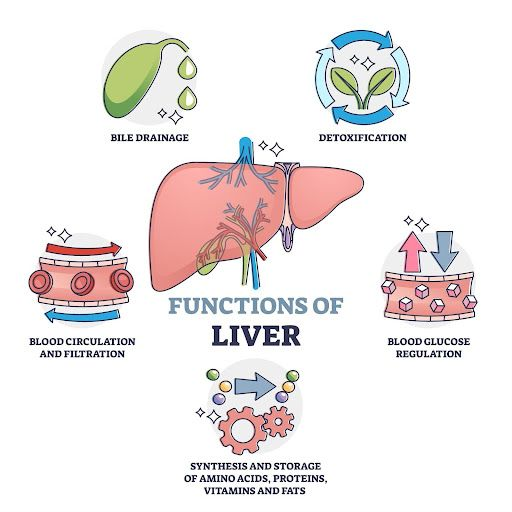
The liver plays a crucial role in the assimilation of amino acids and their conversion into proteins.
Here’s a breakdown of its functions:
- Amino Acid Absorption and Storage:
- The liver receives amino acids absorbed from the intestines through the portal vein.
- It stores excess amino acids for future use in protein synthesis or energy production.
- Protein Synthesis:
- The liver is the primary site of protein synthesis in the body.
- It synthesizes various proteins essential for bodily functions, including:
- Albumin: A protein that maintains blood volume and pressure.
- Fibrinogen: A protein involved in blood clotting.
- Enzymes: Proteins that catalyze chemical reactions.
- Hormones: Proteins that regulate bodily functions.
- Amino Acid Metabolism:
- The liver regulates the levels of amino acids in the blood.
- It breaks down excess amino acids through a process called deamination.
- Deamination involves removing the amino group from an amino acid, resulting in ammonia.
- The liver converts ammonia into urea, a less toxic substance that can be excreted by the kidneys.
- Energy Production:
- If amino acids are not needed for protein synthesis, the liver can convert them into glucose or fat for energy.
- This process is known as gluconeogenesis and lipogenesis, respectively.
- Nitrogen Balance:
- The liver plays a key role in maintaining nitrogen balance in the body.
- It ensures that the amount of nitrogen ingested in the form of amino acids is equal to the amount excreted.
In summary, the liver is a vital organ in the assimilation and metabolism of amino acids. It acts as a central hub for protein synthesis, amino acid regulation, and nitrogen balance.
- Describe deamination in the liver as the removal of the nitrogen-containing part of amino acids, resulting in the formation of urea?
Deamination is a metabolic process that occurs in the liver, specifically involving the removal of the nitrogen-containing amino group (-NH2) from an amino acid. This process results in the formation of a keto acid and ammonia.
The steps involved in deamination are:
- Transamination: This is the initial step where the amino group is transferred from the amino acid to an alpha-keto acid, such as alpha-ketoglutarate or pyruvate. This reaction is catalyzed by aminotransferases.
- Oxidative Deamination: The amino group is removed from the amino acid as ammonia. This reaction is catalyzed by enzymes such as glutamate dehydrogenase.
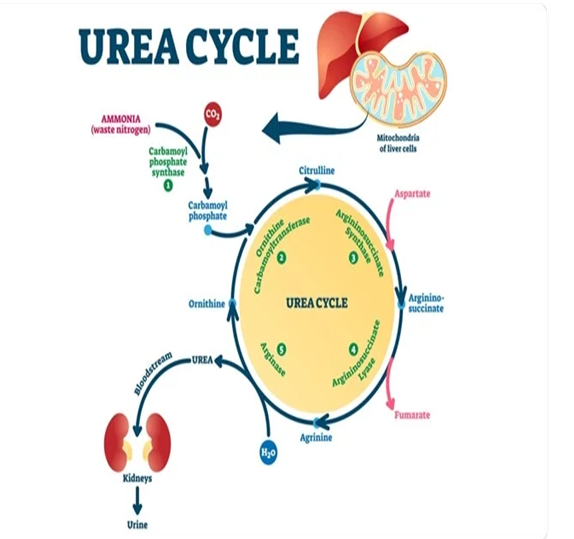
- Urea Cycle: The ammonia produced in deamination is converted into urea in the urea cycle. This cycle occurs primarily in the liver and involves several steps to convert toxic ammonia into the less toxic urea.
The overall reaction of deamination can be summarized as:
Amino acid + Alpha-keto acid → Keto acid + New amino acid (transamination) Amino acid → Keto acid + Ammonia (oxidative deamination) Ammonia → Urea (urea cycle)
The urea formed in this process is excreted from the body through the kidneys. Deamination is essential for maintaining nitrogen balance in the body and preventing the accumulation of toxic ammonia.